

Product Materials and Our Transition Progress

This month, we are excited to share our progress in shifting to preferred materials and reducing environmental impact with you. Using preferred materials is a key part of our sustainability journey.
At the heart of our sustainability commitment lies a clear vision—to reduce the environmental impact of our products. This year, we’ve made significant progress by increasing the use of preferred materials like organic cotton, recycled polyester, recycled polyamide, and man-made cellulosic fibers (MMCF).
Here’s what we achieved in 2025: Our global collection achieved 34%, marking a significant increase from 27% in 2024! A strategic roadmap for transitioning key GWF running series to preferred materials each season. Every percentage increase represents concerted effort and care, from identifying innovative material sources to refining production practices.
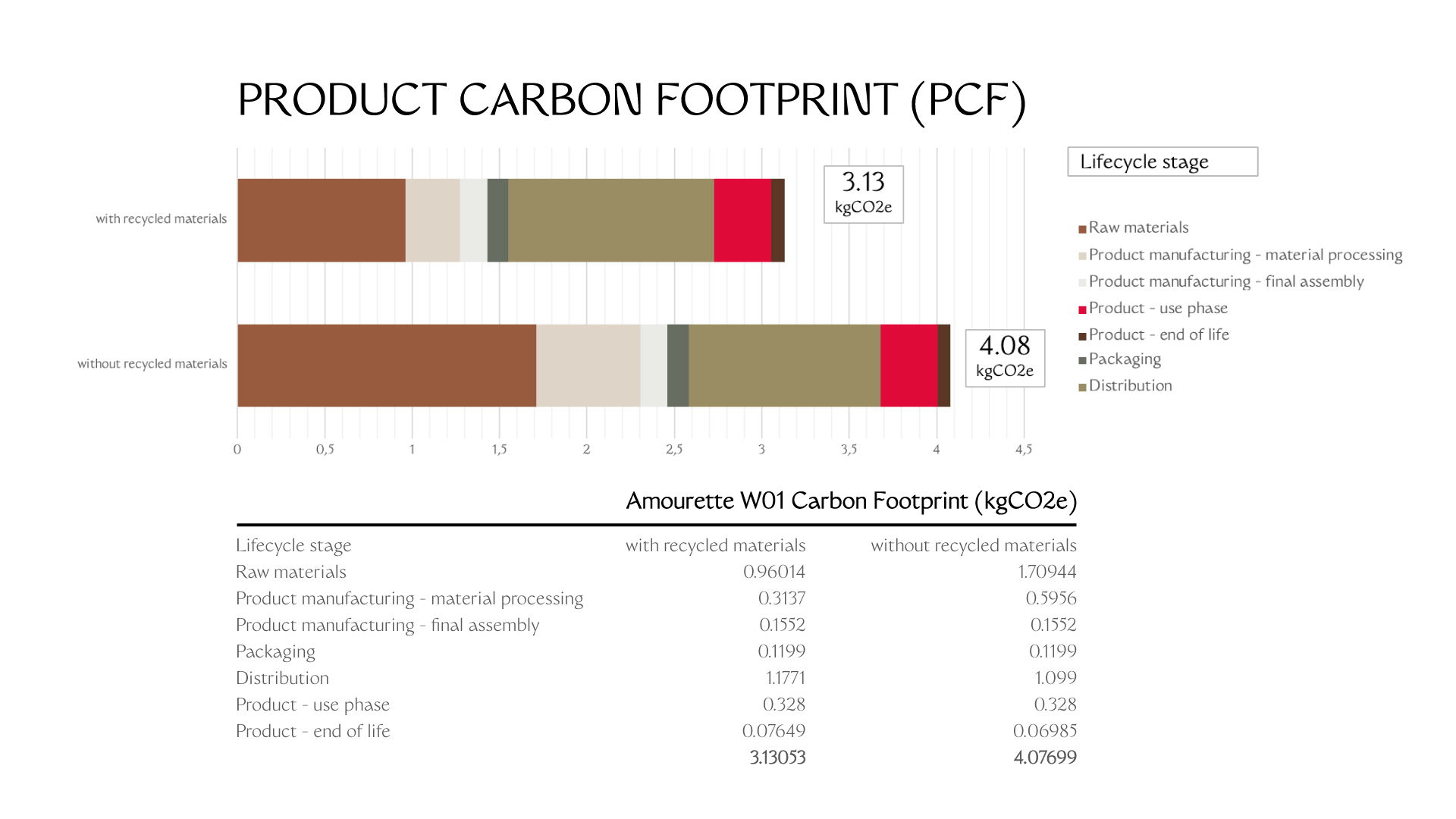
To better understand the impact of switching from virgin materials to preferred materials, we can examine the efforts using one of our bestsellers, the Amourette, as an example. We will specifically focus on the Amourette W01 style to evaluate the effect of using recycled materials. In the “raw materials” category, the recycled version of this product has a significantly lower environmental impact compared to the conventional version, resulting in a 23% reduction in its product carbon footprint. This demonstrates our commitment to transitioning our products to more sustainable, preferred materials. (The data below is induction from the weight of carbon emissions)
A Look Ahead
Change is never passive. Together, we’re steadily advancing toward a future where more of what you love is made with consideration for our planet.